Showing posts tagged: execution · Clear filter

Price Arbitrage Opportunities: When to Take Them and When to Walk Away
Not every cross-exchange price gap is tradable. Learn when price arbitrage is worth it (sudden surge, room after orderbook spread) and when to skip persistent spreads that may never converge.

Price Arbitrage Workflow: From Telegram Alert to Hedged Exit
A step-by-step price arbitrage workflow: Price Opportunity alert, live scanner, Price Chart, orderbook check, staged entry, portfolio monitoring, and exit triggers.

Gross Price Gap vs Net Edge: Why Orderbook Spread Eats Your Arbitrage
The cross-exchange price gap on your scanner is gross—not what you keep. Learn how bid-ask spread on each venue turns headline % into net edge, and why unrealized PnL lies.
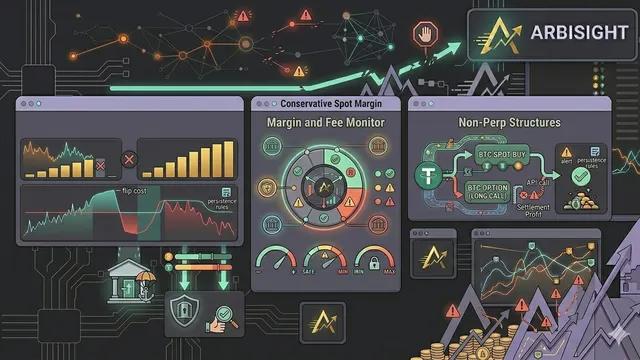
How to Trade Funding Arbitrage During High Volatility Without Panic
High volatility changes fees, basis, and margin faster than funding prints update. Here is a calm, process-first playbook for crypto arbitrage during volatility — sizing, buffers, execution, and when to stand down.

How to Size Your Crypto Arbitrage Position Correctly
Position sizing for crypto arbitrage is not "max leverage." Here is a practical framework for notional, margin buffer, fee drag, and venue depth so your edge survives real markets.
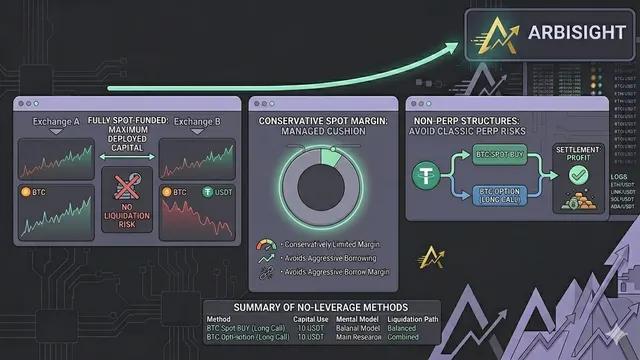
The Complete Funding Rate Arbitrage Checklist: Entry to Exit
A trader-grade funding rate arbitrage checklist from pre-trade validation through monitoring and exit—so you do not skip the steps that separate net profit from avoidable losses.

How to Calculate Real Net Return from Funding Arbitrage (After All Fees)
Gross funding is marketing; net return is bookkeeping. Learn how to build a realistic funding arbitrage net return model: fees, slippage, borrow, transfers, and tax of complexity.
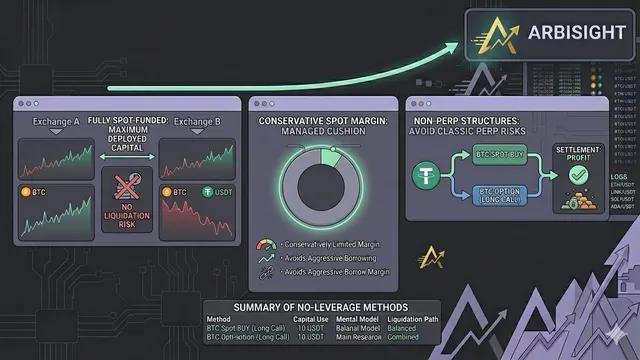
How to Read an Orderbook for Arbitrage Entry Quality
Orderbook analysis for crypto arbitrage is how you translate a scanner headline into feasible fills: spread, depth, imbalance, spoofing cues, and when to shrink size or skip.
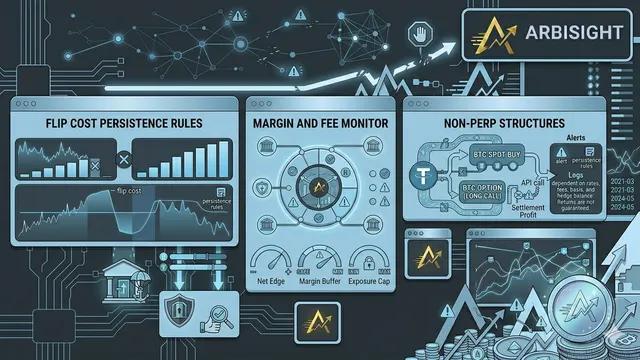
What Can Go Wrong in Crypto Arbitrage? Real Risks Explained
Crypto arbitrage risks explained without fear-mongering: execution gaps, funding flips, basis shocks, exchange and smart-contract failure modes—and what actually reduces each risk.
Maker vs Taker Reality on MEXC and Pionex: How Execution Style Changes Funding Carry
Execution lens on MEXC vs Pionex: how maker/taker habits change whether funding carry survives contact with the book.
Maker vs Taker Reality on MEXC and Paradex: How Execution Style Changes Funding Carry
Execution lens on MEXC vs Paradex: how maker/taker habits change whether funding carry survives contact with the book.
Maker vs Taker Reality on KCEX and Pionex: How Execution Style Changes Funding Carry
Execution lens on KCEX vs Pionex: how maker/taker habits change whether funding carry survives contact with the book.
Maker vs Taker Reality on HTX and YEX: How Execution Style Changes Funding Carry
Execution lens on HTX vs YEX: how maker/taker habits change whether funding carry survives contact with the book.

Maker vs Taker Reality on HTX and Tapbit: How Execution Style Changes Funding Carry
Execution lens on HTX vs Tapbit: how maker/taker habits change whether funding carry survives contact with the book.
Maker vs Taker Reality on Gate and Paradex: How Execution Style Changes Funding Carry
Execution lens on Gate vs Paradex: how maker/taker habits change whether funding carry survives contact with the book.
Maker vs Taker Reality on dYdX and Paradex: How Execution Style Changes Funding Carry
Execution lens on dYdX vs Paradex: how maker/taker habits change whether funding carry survives contact with the book.
Maker vs Taker Reality on dYdX and Gate: How Execution Style Changes Funding Carry
Execution lens on dYdX vs Gate: how maker/taker habits change whether funding carry survives contact with the book.

Maker vs Taker Reality on Crypto.com and WOO X: How Execution Style Changes Funding Carry
Execution lens on Crypto.com vs WOO X: how maker/taker habits change whether funding carry survives contact with the book.