BTSE vs Bitunix vs Binance: Funding Rate Comparison for Arbitrage Traders
When traders search for BTSE Bitunix funding rate comparison lists, they usually want a clean winner. Reality is messier: funding is a live creature shaped by each venue's participants, risk controls, and listing mix.
Still, comparing BTSE, Bitunix, and Binance is worthwhile—because CEX arbitrage often lives in small, recurring advantages that compound.
What a Funding Comparison Must Include (Or It Lies)
Raw funding prints are not enough.
Also compare:
- maker/taker fees at your tier
- margin interest or borrow constraints
- withdrawal friction
- depth for your size (spread tracking in practice)
Binance: Depth as Default
Binance often wins the liquidity conversation on majors—which can reduce slippage tax.
Crowding can also mean extremes normalize fast. Your funding rate arbitrage window may be shorter but cleaner to trade with size.
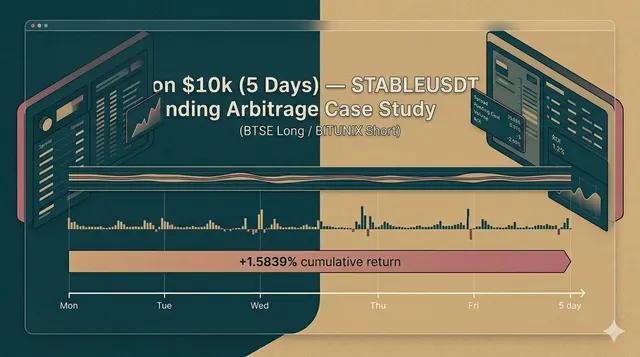
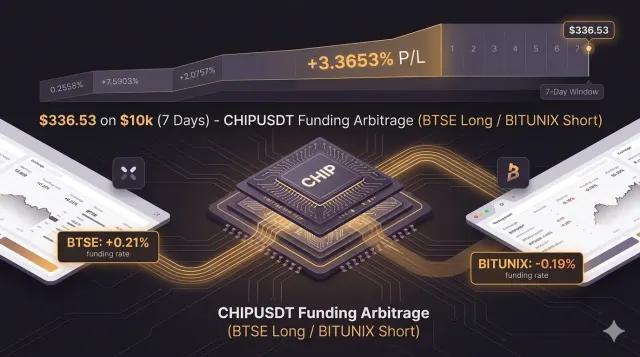
BTSE: Useful Niche and Structural Habits
Some traders keep BTSE in rotation for specific pairs or operational preferences.
The lesson: do not romanticize any venue—track what your own fills say.
Bitunix: Treat Like Any Growing Venue—Check Books
Faster-growing platforms can show spicy prints sometimes, but liquidity may vary by asset.
Lean on Orderbook Snapshot before you rely on a screenshot.
How Traders Use a Three-Venue Workflow
- Scan candidates: Live Crypto Arbitrage
- Shortlist: Watchlist
- Model: Arbitrage Profits
- Enter carefully: Slow Entry when spreads are wide
- Monitor prints: Alerts + Funding Cycle Timing Strategy
- Track exposure: Portfolio Management
Arbitrage Scanner Hygiene
A crypto arbitrage scanner may show different timestamps across APIs.
If you want a free crypto arbitrage scanner experience for learning, perfect—just verify rates on-exchange before committing.
Futures Arbitrage vs Transfer Arbitrage
If you cannot move collateral quickly, you may prefer funding-style futures arbitrage within accounts you already trust.
Crypto Arbitrage for Beginners
If you are newer, do not three-tab hero trade on day one. Learn one pair deeply, then scale venues.
Crypto arbitrage tools are multipliers of skill, not substitutes.
Bottom Line
BTSE vs Bitunix vs Binance is less about forever ranking and more about where your next trade clears best after fees and risk.
Treat venues like tools, not teams.
Logging the Three-Venue Experiment
If you rotate venues, keep a simple matrix: venue, pair, average slippage, average realized funding capture, and "operational incidents." After a month, the matrix tells you what Twitter cannot.
When Lists Mislead: Extreme Funding on Illiquid Names
Lists love extremes. Your account loves liquidity.
If you chase high funding on thin books, you may win screenshots and lose fills.
Free funding rate tracking habits
Use free tiers to learn cadence before paying for anything. Paid features can help, but they rarely fix broken fundamentals like fat-finger sizing.
Scaling Responsibly
As size grows, your job becomes minimizing tail risks: partial outages, awkward liquidation distances, and correlation stacks across alts.
Portfolio Management is how scaling stays boring—in a good way.
When a Third Venue Helps—and When It Hurts
A third venue can add redundancy; it can also add login fatigue and fragmented collateral. Add it when your logs prove friction costs, not when you crave novelty.
Transfer Windows and Calendar Discipline
If your workflow depends on moving coins, build a calendar habit: know expected transfer variability and avoid stacking critical hedges around uncertain windows.
A Simple "No Trade" Trigger List
Documentation lag, unclear margin mode changes, or repeated API stalls belong on a hard no-trade list. Crypto arbitrage tools cannot fix exchange instability.
Naming Convention Scraps That Trip People Up
Perp contracts can look alike while hiding index differences. Before you celebrate a spread, confirm you are trading the same underlying construction—not a cousin listing.
Sizing Down When Uncertainty Rises
When policy chatter spikes or liquidity flickers, the clever move is often smaller size and wider buffers. Futures arbitrage survives on humility during uncertainty.
Collateral Placement as Strategy
Where you park collateral changes responsiveness. If you repeatedly lose edge to slow rebalancing, the fix might be organizational—pre-positioning—not a new indicator.
Small workflow upgrades compound like interest.
When to Archive a Venue (For Now)
If operational incidents become patterned, archive the venue temporarily. Returning later is allowed; bleeding respect on bad rails is optional.
A Final Note on Tribal Loyalty
Communities love defending brands; accounts love clear metrics. If loyalty makes you ignore repeated operational failures, you are paying a tax that never shows up in a fee schedule.
Be loyal to process, not to posters.
If you want one extra lens, compare DEX arbitrage curiosity against your actual maintenance tolerance—most three-venue CEX traders win from logistics discipline, not from collecting venues like trophies.
Disclaimer: This article is for educational purposes only and is not financial advice. Always do your own due diligence before trading.