Funding Rate Trends in 2026: What the Data Is Telling Arbitrage Traders
If you type funding rate trends 2026 into a search bar, you will get two kinds of content: charts that look authoritative, and opinions dressed up as inevitabilities.
This article takes a narrower path. It is written for arbitrage desks and serious retail operators who use funding as carry, not as a directional bet — and who know the difference between a pretty graph and a tradable process.
First, a Grounding Rule: "The Data" Is Not One Number
Funding rate prints are snapshots. A trend is a story you build from many snapshots plus context:
- cadence (how often funding settles),
- cross-exchange dispersion (who disagrees with whom),
- persistence (does the skew survive multiple intervals?),
- liquidity (can you actually trade the edge at your size?),
- all-in costs (fees, borrow, transfers, and realistic slippage).
So when people say "funding rate trends 2026 are bullish for carry," ask which dataset they mean — and whether it clears a net-edge test after costs.
What Many Desks Watch in 2026 (Structural Lenses, Not Price Calls)
Markets change year to year, but the lenses that matter for funding rate arbitrage tend to recur. In 2026, three themes show up repeatedly in professional workflows:
1) Competition for the same carry trades
As crypto arbitrage tools improve, more capital can arrive at the same arbitrage perpetuals idea within minutes. That often compresses gross funding faster than beginners expect — which makes execution and fee tier the real differentiators.
2) Dispersion as the "real" opportunity field
Even when average funding looks tame, CEX arbitrage style workflows can still find value when two venues price the same risk differently for a window of time.
That is less about a single headline rate and more about stable rank on an arbitrage screener or arbitrage scanner: the same names sitting near the top across refreshes, not one lucky spike.
3) Regime shifts around stress events
Volatility clusters. Positioning resets. Funding can flip quickly after liquidations, listings narratives, or macro shocks.
Trend readers in cryptocurrency arbitrage often focus less on predicting the shock and more on measuring how fast funding mean-reverts afterward — because that speed determines whether a hedge should be scaled up, scaled down, or skipped.
How "Trend" Shows Up on the Tape (Without Confusing It for Edge)
Here are patterns many traders treat as signals to investigate, not as automatic entries:
- Positive funding persistence during risk-on phases (often tied to crowded long leverage in perps).
- Negative funding persistence during risk-off or forced deleveraging phases (short-biased crowding can also pay the other side of a hedge — depending on your structure).
- Post-event normalization where extreme prints revert within a small number of intervals — a reminder that annualized screenshots lie easily.
If your goal is to earn from funding rate income, the actionable output is usually: is the carry still there after my assumptions, and can I enter/exit without donating it back?
Translating Trends Into a Calm Workflow
Funding rate tracking only helps if it connects to decisions. A simple workflow:
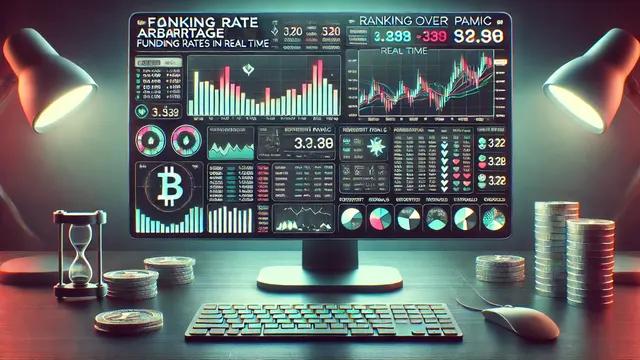
- Discover what is moving using Live Crypto Arbitrage.
- Quantify net outcomes with Arbitrage Profits — gross funding is not net life.
- Time intervals thoughtfully with Funding Cycle Timing Strategy when cadence matters across venues.
- Validate liquidity with Orderbook Snapshot before sizing.
- Monitor drift and margin with Portfolio Management — trends change fastest when you stop watching mechanics.
If you want passive awareness, free funding rate tracking and free arbitrage monitoring can reduce blind spots — as long as alerts feed a checklist, not panic clicks.
Where a Free Crypto Arbitrage Scanner Fits (Without Overfitting)
Scanner culture rewards speed. Funding rate trends 2026 analysis rewards patience.
A free crypto arbitrage scanner tier can be an excellent triage layer if you use it to answer: what deserves a second look right now? Then you confirm with depth, fees, and persistence before committing capital.
That is also the honest answer to "is it safe to use arbitrage scanner tools?" — safety is mostly your sizing, margin buffer, and execution rules; the scanner is visibility.
Closing Thought
Funding rate trends 2026 matter because they describe how crowded and how competitive the carry game is at any moment — not because they tell you the future price of Bitcoin.
If you treat trends as operating conditions (costs, dispersion, persistence, stress), you will usually make better futures arbitrage decisions than if you treat trends as a story to believe — especially when crypto arbitrage between exchanges is your primary hunting ground.
Spread tracking stays the reality check for spot-futures arbitrage style hedges: the best arbitrage scanner workflow is the one that still works when the tape lies for five minutes.
Disclaimer: This article is educational content only and not financial advice. Trading carries risk, including loss of capital. Past funding behavior does not predict future funding or returns.