Showing posts tagged: volatility · Clear filter

When a Crash Creates Too Many Opportunities: Lessons From October 10, 2025
The October 2025 crypto flash crash liquidated billions and opened countless trades at once. Here is why "more opportunities" can feel paralyzing—and how directional pain coexisted with arbitrage wealth.
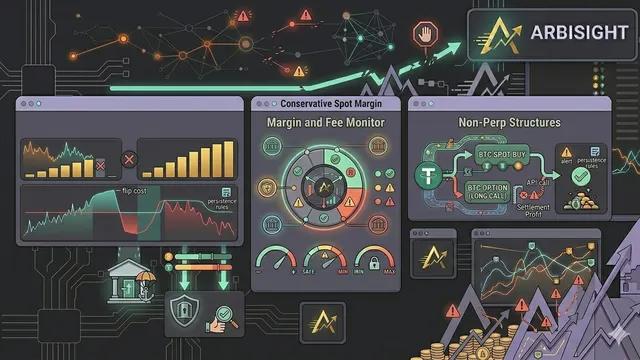
How to Trade Funding Arbitrage During High Volatility Without Panic
High volatility changes fees, basis, and margin faster than funding prints update. Here is a calm, process-first playbook for crypto arbitrage during volatility — sizing, buffers, execution, and when to stand down.

OKX vs Pionex Funding During Volatility: What Usually Breaks First
Volatility checklist for OKX and Pionex: what changes first when markets speed up, and how to keep a hedged workflow boring.

WOO X vs XT Funding During Volatility: What Usually Breaks First
Volatility checklist for WOO X and XT: what changes first when markets speed up, and how to keep a hedged workflow boring.
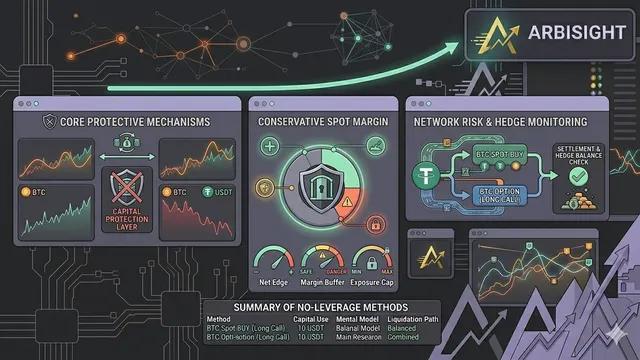
When a Coin Surges 100%+ in 24 Hours: Funding Opportunities, Cycle Gaps, and Liquidation Risk
Extreme 24-hour pumps often blow out perpetual funding and widen cross-exchange funding cycles — which can create rare carry and timing edges. Alerts on funding changes and cycle mismatches (e.g. 4h vs 1h venues) help you validate faster — but liquidation and basis risk jump too.

Paradex vs Tapbit Funding During Volatility: What Usually Breaks First
Volatility checklist for Paradex and Tapbit: what changes first when markets speed up, and how to keep a hedged workflow boring.

Which Exchanges Have the Most Extreme Funding Rates? (2026 Data)
Extreme funding is less about bragging rights and more about risk. Learn how to find the wildest prints in 2026, what drives them, and how to trade without hero mistakes.

What Happens to Your Money in a Crash When You're Running Funding Arbitrage?
Funding arbitrage is often sold as calm—until volatility arrives. Here is what actually breaks first in a crash: margin, basis, funding sign, and operational exits.

MEXC vs OKX Funding During Volatility: What Usually Breaks First
Volatility checklist for MEXC and OKX: what changes first when markets speed up, and how to keep a hedged workflow boring.

HTX vs WEEX Funding During Volatility: What Usually Breaks First
Volatility checklist for HTX and WEEX: what changes first when markets speed up, and how to keep a hedged workflow boring.

Gate vs Levex Funding During Volatility: What Usually Breaks First
Volatility checklist for Gate and Levex: what changes first when markets speed up, and how to keep a hedged workflow boring.

Gate vs Hyperliquid Funding During Volatility: What Usually Breaks First
Volatility checklist for Gate and Hyperliquid: what changes first when markets speed up, and how to keep a hedged workflow boring.

dYdX vs OrangeX Funding During Volatility: What Usually Breaks First
Volatility checklist for dYdX and OrangeX: what changes first when markets speed up, and how to keep a hedged workflow boring.

dYdX vs LBank Funding During Volatility: What Usually Breaks First
Volatility checklist for dYdX and LBank: what changes first when markets speed up, and how to keep a hedged workflow boring.

Crypto.com vs XT Funding During Volatility: What Usually Breaks First
Volatility checklist for Crypto.com and XT: what changes first when markets speed up, and how to keep a hedged workflow boring.

Bybit vs Paradex Funding During Volatility: What Usually Breaks First
Volatility checklist for Bybit and Paradex: what changes first when markets speed up, and how to keep a hedged workflow boring.

Bybit vs KuCoin Funding During Volatility: What Usually Breaks First
Volatility checklist for Bybit and KuCoin: what changes first when markets speed up, and how to keep a hedged workflow boring.

BTSE vs WOO X Funding During Volatility: What Usually Breaks First
Volatility checklist for BTSE and WOO X: what changes first when markets speed up, and how to keep a hedged workflow boring.