Funding Rate Arbitrage vs Staking: Which Pays Better in 2026?
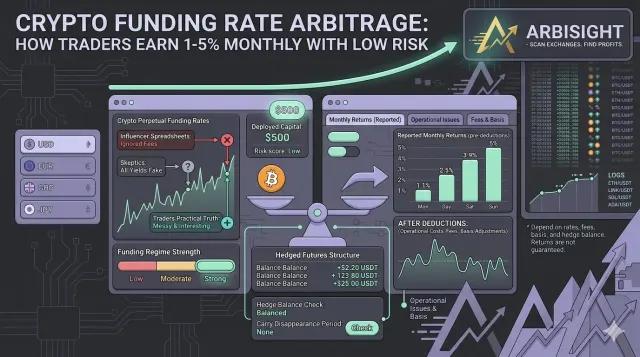
People googling crypto staking vs arbitrage returns usually want one blunt answer. Markets refuse to give one. Staking pays you for locking participation risk with a protocol. Funding rate arbitrage pays you for operating hedged futures / perpetual carry — harvesting funding (and sometimes fee edges) between exchanges while aiming for almost zero net directional exposure to spot moves.
This piece compares income mechanics, not hype headlines — then shows how ArbiSight helps if you choose the arbitrage path: fewer blind spots when hunting high opportunity, more guardrails on execution risk.
Disclaimer upfront: “Better” depends on capital, chain, fee tier, tax posture, and whether you can run hedges competently. Past staking APYs and past funding windows do not guarantee 2026 outcomes.
Two different jobs
| Lens | Staking (typical retail framing) | Funding-rate arbitrage (hedged perp workflow) |
|---|---|---|
| What you’re paid for | Consensus participation / protocol emission economics | Funding imbalances + cross-venue rate differences after costs |
| Liquidity | Often bonded / unbonding queues | Generally more active — but operational workload rises |
| Dominant risk modes | Slashing, protocol changes, asset drawdown while locked | Hedge drift, basis, margin stress, exchange friction |
| “Set and forget” | Closer — still not zero-maintenance | Usually false — funding regimes move |
So crypto staking vs arbitrage returns is only partly about headline APR/APY. It is mostly about which risks you want on your calendar.
When staking can look “better” on paper
Staking can win when you want:
- Simple UX and fewer moving parts
- Predictable dashboard yields (until protocol parameters change)
- Exposure aligned with a chain you already hold long-term
Staking is not risk-free: smart-contract and validator risk exist; emissions schedules change; liquid staking adds counterparty layers.
When funding / perp arbitrage can pay better — with different work
Funding rate arbitrage often shines when:
- Funding is persistently skewed and cross-exchange spreads are wide enough after fees
- You can maintain hedges and capture crypto arbitrage between exchanges
- You treat funding rate tracking as an ongoing task, not a one-click yield
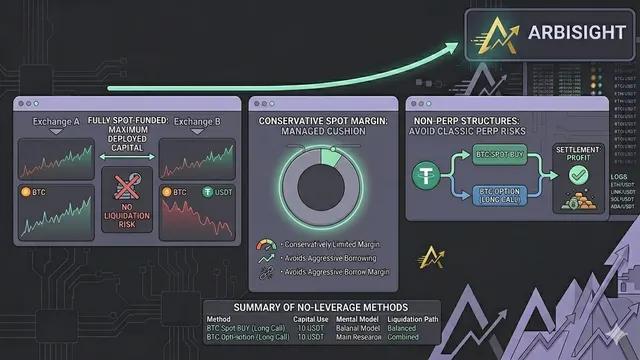
Economically, hedged perpetuals carry is frequently lower directional risk than naked leverage — low risk relative to speculation because you are trying not to bet primarily on price direction — not “safe” in any absolute sense (basis, liquidation, operational hazards remain).
“Which pays better in 2026?” — a practical verdict frame
Instead of picking a universal winner, ask:
- Net or gross? Compare take-home after fees, slippage, tax assumptions.
- Time budget? Staking may cost fewer hours; arbitrage rewards operators.
- Liquidity needs? Locked stakes vs faster unwinds (still not instant — transfers matter).
- Stress tolerance? Slashing vs hedge breakage — different pains.
If your edge is patience and conviction in a chain, staking can be coherent. If your edge is execution and spread tracking, funding arbitrage may fit.
ArbiSight: built for the arbitrage side of the fence
ArbiSight does not replace staking wallets — it sharpens arbitrage perpetuals workflows:
See opportunity
- Live Crypto Arbitrage — think free crypto arbitrage scanner (free to start): fewer missed crosses while scanning venues.
Kill spreadsheet fantasies
- Arbitrage Profits — compare gross funding to something closer to realized crypto arbitrage earnings after fees.
Avoid quiet blow-ups
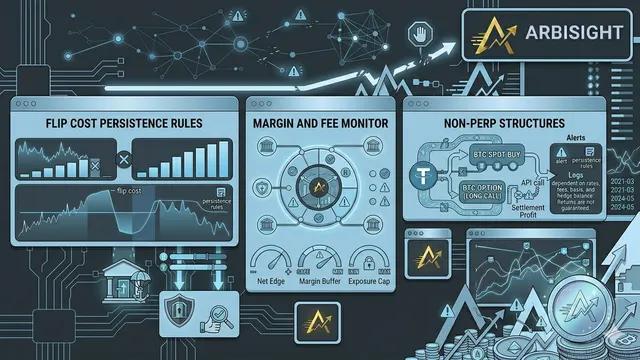
- Alerts — free funding rate alerts where your tier allows; regimes flip faster than weekend research.
Keep hedges honest
- Portfolio Management — drift turns “low risk” stories into directional accidents.
Size like liquidity exists
- Orderbook Snapshot — depth before you chase a fat funding print.
That stack targets high opportunity without pretending futures funding is hands-off yield.
Ground truth examples (funding arb only)
For logged funding windows (education), browse CHIPUSDT case study and ENJUSDT case study. These illustrate realized carry segments — not staking benchmarks.
Bottom line
Crypto staking vs arbitrage returns in 2026 will depend more on your capital, chains, and operator skill than on a universal leaderboard.
If you want lower directional risk income tied to perp funding mechanics, hedged funding rate arbitrage is a coherent lane — pair it with best arbitrage scanner habits (discovery + monitoring) and tools that show net outcomes.
Disclaimer: Educational content only; not financial advice. Staking and arbitrage involve risk of loss. Safe / low risk refers to relative risk versus typical directional trading for hedged funding workflows — not zero risk. Yields and funding regimes change.