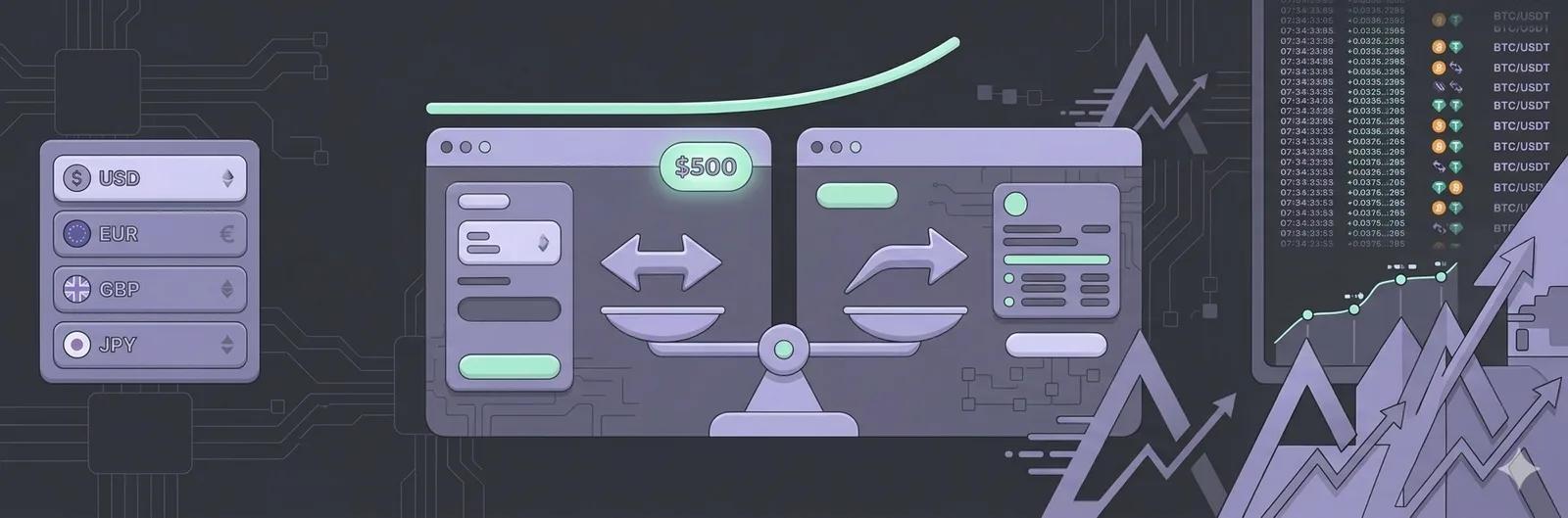
Crypto Arbitrage for Beginners: Start With $500 Using Funding-Rate Perp Carry
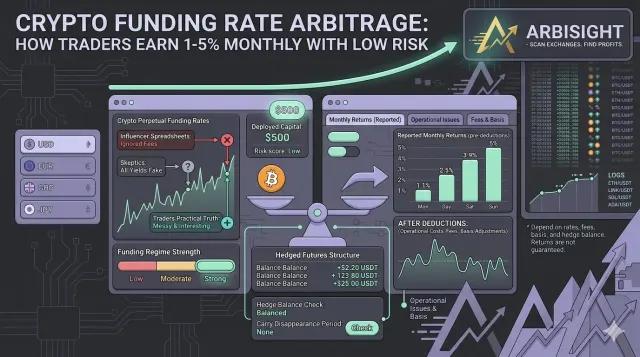
If you are researching crypto arbitrage for beginners, you have probably seen two extremes: influencers promising effortless profits, and skeptics saying you need six figures to matter. The useful truth sits in the middle — especially when you start crypto arbitrage with just $500 (give or take), if you choose a strategy where fees do not swallow the edge and where risk is understandable.
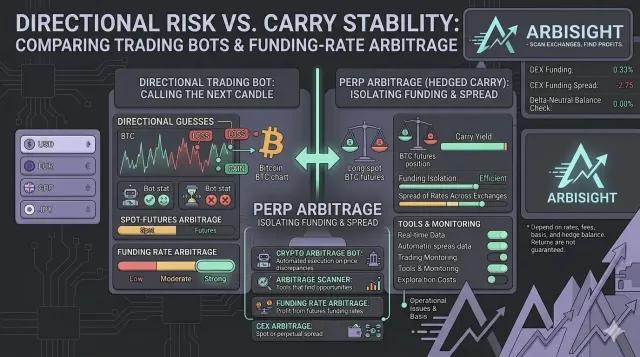
This guide focuses on one of the most approachable lanes for small accounts: funding rate and perpetual futures funding-fee style carry — hedged exposure where your outcome depends more on who pays funding and cross-exchange spreads than on predicting the next candle. Done with discipline, it is often lower risk than naked leverage trading — not risk-free, but safer in the sense of reducing directional gambling.
You will also see how ArbiSight helps you find opportunities and lower practical risk through scanning, alerts, and portfolio visibility — free to start on core discovery for many users.
What “crypto arbitrage for beginners” should mean
Cryptocurrency arbitrage is simply exploiting price differences or funding differences across markets. For beginners, the failure mode is usually bad sizing, ignored fees, or opaque leverage — not “lack of genius.”
So the best crypto arbitrage tools for newcomers are the ones that make fee math, liquidity, and hedge quality visible before you commit.
Why futures / perp funding-rate carry can be safer (lower risk) than direction bets
When people say earn from funding rate, they usually mean one of these realities:
- Perpetuals charge funding between longs and shorts to keep price near spot.
- If you hold a hedged structure (for example spot vs perp, or perp vs perp across exchanges), your exposure can be closer to neutral than a pure long.
- Your edge can come from funding rate arbitrage — capturing persistent differences between exchanges after costs.
That is why arbitrage perpetuals discussions often sound like “yield”: it is closer to carry than to prediction. Funding rate tracking matters because funding sign and magnitude change — “passive” still needs monitoring.
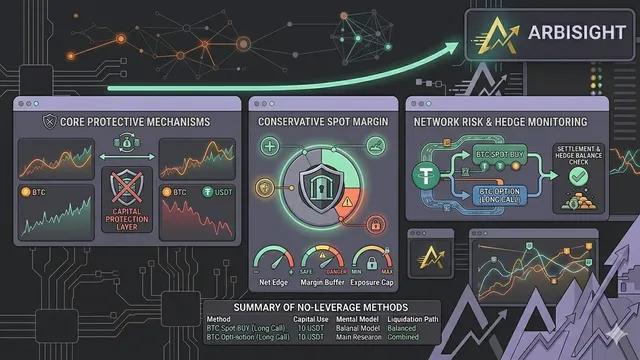
Safer here means relative: you still face basis drift, operational risk, and margin stress if hedges slip. But compared to all-in directional trades, many beginners prefer legible risks they can measure.
Can you really start crypto arbitrage with just $500?
Yes — as a learning and small-edge lane, with caveats:
- Fees matter more at small size. Very tight edges may net to zero after costs.
- You may start with partial hedges or one venue research before scaling — still educational.
- Treat $500 as a tuition budget with upside, not a guaranteed paycheck.
If your goal is crypto arbitrage for beginners with real discipline, $500 is enough to practice process: journal trades, verify fills, and learn spread tracking habits that scale later.
How ArbiSight helps beginners lower risk and find stronger setups
ArbiSight is built around discovery + monitoring, not hype. For lower risk workflows, prioritize tools that reduce blind spots:
- Live Crypto Arbitrage — treat it as a free crypto arbitrage scanner entry point (free to start for core scans) to see crypto arbitrage between exchanges in one place instead of tab chaos.
- Arbitrage Profits — quick modeling so you do not mistake gross funding for net edge after fees.
- Alerts — free funding rate alerts (per your tier) so “set and forget” does not become “surprised by a funding flip.”
- Portfolio Management — keep hedges aligned; mismatched notionals are a hidden risk beginners underestimate.
- Orderbook Snapshot — sanity-check whether your $500 scale can actually fill without bad slippage.
Together, these crypto trading tools attack the real beginner problem: unknown execution risk — which is how people lose money even when the arbitrage screener looked good on paper.
A sensible progression (still educational — not a promise)
- Learn funding rate mechanics on your venues’ docs.
- Track a small watchlist for several days — funding rate tracking beats one-hour screenshots.
- Compare expected carry vs fees using Arbitrage Profits.
- Only scale size after your process is boringly repeatable.
For deeper context, read Crypto Funding Rate Arbitrage Strategy Guide (2026) and our funding case studies (CHIPUSDT example, ENJUSDT example) — they show real windows, not theory.
Bottom line
Crypto arbitrage for beginners works best when you stop chasing “secret bots” and start engineering edge minus fees with hedged futures / perp funding thinking — and when you start crypto arbitrage with just $500 as a structured practice, not a lottery ticket.
ArbiSight exists to help you find opportunities with fewer blind spots and lower operational risk through monitoring — the rest is execution discipline.
Disclaimer: Educational content only; not financial advice. Arbitrage, perpetuals, and funding strategies involve risk of loss. Safe / low risk means relative to typical directional trading, not zero risk. Past examples do not guarantee future results.