Showing posts tagged: beginners · Clear filter
How Much Money Do You Need to Start Funding Rate Arbitrage?
I break down starter vs serious capital tiers for delta-neutral funding carry—from where fees overwhelm edge to ratios I actually enforce before clicking send.

Crypto Arbitrage for Beginners: Start With $500 Using Funding-Rate Perp Carry
A beginner-friendly path to crypto arbitrage from ~$500: why hedged futures funding-rate carry is often lower risk than guessing price — and how ArbiSight helps you scan, size, and monitor responsibly.

Earn Money from Crypto Safely: Passive Income, Low Risk, and Funding-Rate Perp Arbitrage
How to think about passive income in crypto with lower risk: why hedged futures and perpetual funding-rate carry can be safer than directional bets — and what still can go wrong.

Crypto Arbitrage Glossary: 25 Terms Every Arbitrage Trader Must Know
A practical crypto arbitrage glossary: 25 must-know terms from spread and basis to funding, delta-neutral carry, and execution risk — with pointers to how ArbiSight supports real workflows.
What Is Funding Rate in Crypto Perpetual Futures? Explained Simply
Funding is the heartbeat of perpetual futures. Here is a plain-English explanation of who pays whom, why it exists, and how traders use it.

Crypto Arbitrage for Beginners: How to Start With $500 or Less
A checklist-first guide for crypto arbitrage beginners at $500 or less: what still works, what breaks at tiny size, and how to practice without fooling yourself.
Step-by-Step: Your First Funding Rate Arbitrage Trade (No Experience Needed)
A plain-language sequence for your first funding rate arbitrage trade: what to open, what to match, what to monitor, and how to exit without improvising under stress.
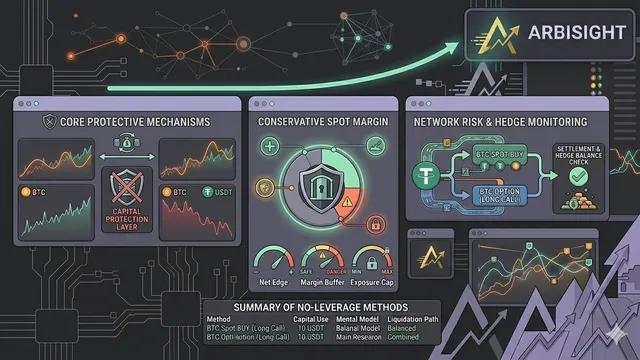
Crypto Arbitrage Without Leverage: Is It Possible? (Yes — Here Is How)
Crypto arbitrage no leverage is possible but changes the menu: cash-and-carry without perps, basis trades with spot margin only, and transport arb with strict fee math. Here is a realistic map.
Beginner Checklist: WEEX vs XT Funding Rates Without Overcomplicating
A beginner checklist for comparing WEEX and XT funding: small size, one pair, and the pages that keep you honest.
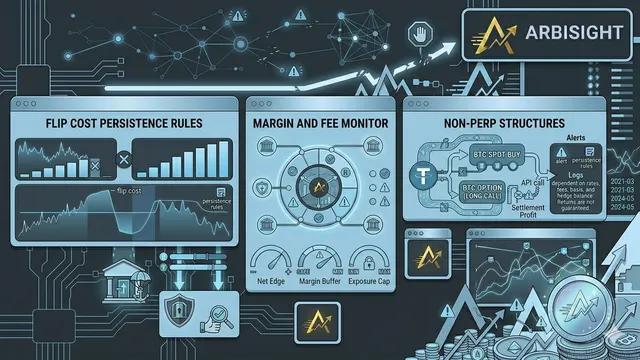
What Is Crypto Arbitrage? Complete Beginner's Guide 2026
Crypto arbitrage is the art of capturing price differences and market mechanics—without turning every trade into a macro thesis. Start here for 2026.

How to Safely Test Funding Rate Arbitrage With a Small Account
Testing funding arbitrage with small capital works when you optimize for learning and fee survival: tiny size, strict checklists, one venue pair, and tools that surface net edge—not vanity APY.
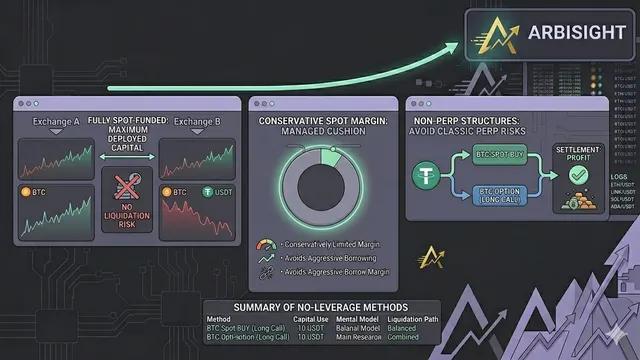
How to Earn Passive Income from Crypto Without Predicting Price Direction
You do not need a crystal ball to earn in crypto. A market-neutral playbook—carry, spreads, and disciplined execution—can tilt the odds toward steady outcomes.

Beginner Checklist: KuCoin vs Tapbit Funding Rates Without Overcomplicating
A beginner checklist for comparing KuCoin and Tapbit funding: small size, one pair, and the pages that keep you honest.
Beginner Checklist: KCEX vs YEX Funding Rates Without Overcomplicating
A beginner checklist for comparing KCEX and YEX funding: small size, one pair, and the pages that keep you honest.
Beginner Checklist: KCEX vs LBank Funding Rates Without Overcomplicating
A beginner checklist for comparing KCEX and LBank funding: small size, one pair, and the pages that keep you honest.

Beginner Checklist: HTX vs WOO X Funding Rates Without Overcomplicating
A beginner checklist for comparing HTX and WOO X funding: small size, one pair, and the pages that keep you honest.

Beginner Checklist: HTX vs KuCoin Funding Rates Without Overcomplicating
A beginner checklist for comparing HTX and KuCoin funding: small size, one pair, and the pages that keep you honest.

Beginner Checklist: Gate vs OrangeX Funding Rates Without Overcomplicating
A beginner checklist for comparing Gate and OrangeX funding: small size, one pair, and the pages that keep you honest.