When a Crash Creates Too Many Opportunities: Lessons From October 10, 2025
Some trading days are quiet. Others are loud.
Then there are days when the market screams—and your screen fills with so many signals that choosing none feels safer than choosing wrong.
October 10, 2025 was one of those days. The cryptocurrency market experienced a record-breaking flash crash, with more than $19 billion in leveraged positions liquidated in a single session—one of the largest wipeouts in crypto history.
Bitcoin fell from highs above $122,000 toward around $104,000, a 14–16% decline in a compressed window that felt longer than it was. Altcoins—already more fragile in stress—saw drawdowns that in places reached up to 80%.
If you were watching live, two truths collided at once:
- Destruction: forced exits, blown accounts, and the emotional whiplash of vertical candles.
- Density: an explosion of prints—basis stretches, funding spikes, spreads blowing out, listings diverging—each one framed as an "opportunity."
That second truth is where many skilled traders quietly struggled—not from lack of ideas, but from too many, arriving too fast.
The Paradox: Abundance Can Feel Like Scarcity
When volatility spikes, scanners light up everywhere. You might see attractive funding differentials, stressed spot–perp relationships, temporary mispricings across venues, and classic "catch the knife" narratives mixed into the same hour.
We have watched clients—perfectly capable on a normal Tuesday—hit the same wall:
- Analysis paralysis: every path looks plausible if you squint.
- FOMO stacking: trying to "grab" multiple unrelated edges at once.
- Operational overload: APIs lag, books thin, transfers clog—execution risk rises exactly when the signal count peaks.
The mind treats ten simultaneous possibilities like an emergency auction. The market treats them like independent risks that compound if you are under-margined, under-slept, or under-disciplined.
Two Outcomes in the Same Storm
Flash crashes do not sort people into "winners" and "losers" by luck alone. They sort by exposure and process.
Directional leverage: wealth on paper, then gone
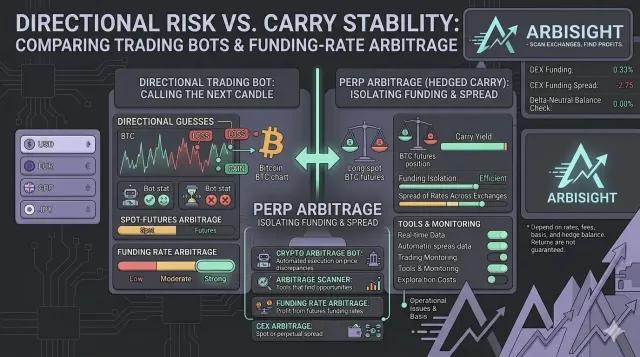
Many participants lost earnings and capital the old-fashioned way in crypto: leverage meeting liquidity gaps. Liquidations do not negotiate. When margin fails, the trade ends regardless of your thesis about what happens next.
Others sold panic, chased bounces, or resized repeatedly mid-drawdown—turning one bad sequence into several.
Arbitrage and market-neutral structures: a different experience
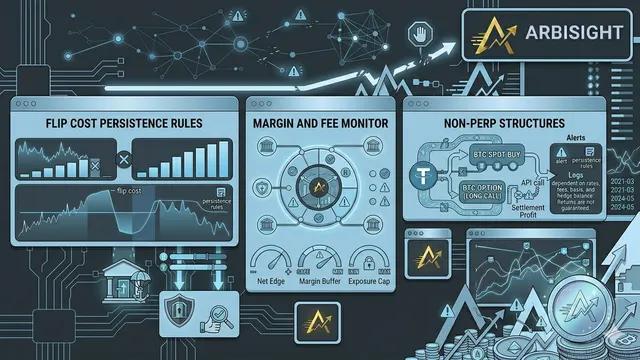
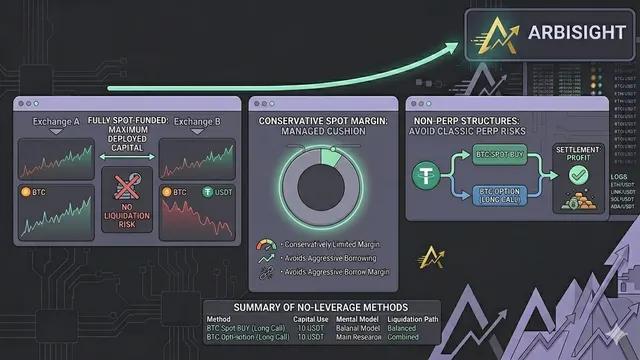
At the same time, arbitrage-style frameworks—designed to harvest structural frictions while keeping directional exposure controlled—created wealth for operators who could still execute cleanly.
That does not mean arbitrage is "safe" in a crash. Basis can bite, legs can slip, and venues can behave badly. It means the failure modes are different: less "I bet wrong on the next candle," more "my hedge drifted" or "my second leg did not fill."
When those risks are sized, monitored, and bounded by rules, painful days can still be operationally survivable—and occasionally profitable—in ways pure directional leverage is not.
What Actually Helps When Everything Looks Like an Opportunity
You cannot catch every edge. No one does. The goal is not to maximize the count of trades; it is to maximize the quality of decisions per unit of risk.
A practical checklist for overwhelm days:
- Shrink first. Volatility is a signal to reduce notional until your worst-case basis move still leaves margin boring.
- Pick one thesis per trade. If the trade needs five miracles to work, it is not one trade—it is a portfolio accident.
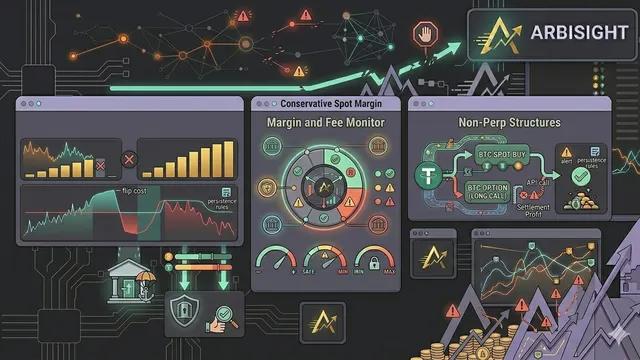
- Pre-define no-trade rules. Degraded exchange status, absurd spreads, or a missing second leg are full stops—not puzzles to solve while red candles print.
- Use tools as triage, not triggers. Live Crypto Arbitrage and related monitors help you see early; your playbook decides whether you act.
- Prefer rehearsed workflows over hero moves. If you have not practiced it calmly, you will not invent it perfectly while stressed.
Closing Thought
October 10, 2025 will be remembered for liquidations and violent moves. It should also be remembered as a lesson in cognitive load: the moment the market offers "everything," disciplined traders often do less, not more.
Opportunity overwhelm is not a character flaw. It is a systems problem. Fix the system—size, rules, execution—and the storm becomes weather you have planned for, not a lottery you must win in one afternoon.
Disclaimer: This article is educational content only and not financial advice. Trading carries risk, including loss of capital. Past events do not predict future results.